Apartment Kitchens: Standard Dimensions and How to Use Them
Typical kitchen dimensions in apartments and how to design cabinets that make the most of every centimeter.
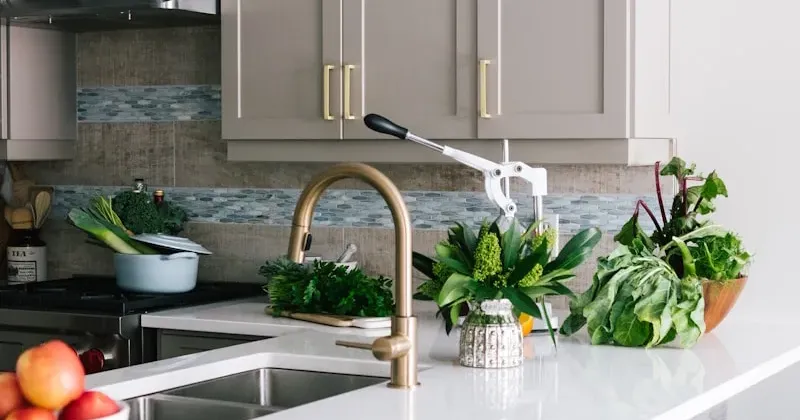
Apartment Kitchens: Standard Dimensions and How to Use Them
Most apartment kitchens follow predictable dimensions. Knowing them lets you plan cabinets that fit perfectly without wasting space and without installation surprises.
Typical Dimensions by Apartment Type
Studio (30-40 m² total): Kitchen wall length 1.50-2.40 m. No separate room — kitchen is on a living room wall. Most common layout: linear.
One bedroom (35-50 m²): Main wall 2.40-3.60 m. Room width 1.80-2.40 m. Most common: linear or short L.
Two bedroom (50-70 m²): Main wall 3.00-4.50 m. Room width 2.10-3.00 m. Most common: L-shape.
Three bedroom (70-100 m²): Main wall 3.60-5.40 m. Room width 2.40-3.60 m. Most common: L or U, island possible in large units.
Fixed Elements That Condition Design
Before measuring for cabinets, identify elements that can't be moved (or cost a lot to move):
Gas connection: Determines stove/cooktop position. Moving it requires a licensed gas fitter.
Water supply and drainage: Sink position is defined by wall plumbing. Moving it more than 30-40 cm means opening walls and rerouting pipes.
Electrical panel: If inside the kitchen (common in older apartments), design a module that contains it with easy access.
Window: Determines where upper cabinets end and may limit counter height if it's very low.
Ventilation column: Many buildings have a ventilation duct protruding from the wall. Must design around it.
Critical Dimensions for Cabinets
Counter depth: 60 cm universal standard. In very narrow kitchens (under 2 m wide), can reduce to 50 cm sacrificing some functionality.
Counter height: 85-87 cm standard. Don't modify unless your height clearly requires it.
Minimum circulation space: 90 cm in front of cabinets. If facing cabinets, minimum 120 cm between them.
Upper cabinet depth: 30-35 cm standard. Never exceed 35 cm.
How to Measure Your Kitchen Correctly
- Measure three times at each dimension: bottom (10 cm from floor), middle (90 cm), and top (200 cm). Apartment walls are rarely perfectly vertical
- Use the smallest measurement as reference
- Mark all connections: cold water, hot water, drain, gas, outlets, switches
- Note window position: from floor to lower frame and from corner to window edge
- Photograph everything for reference
Tricks to Maximize Small Kitchens
Use every available wall: A short 60-80 cm wall between door and corner can hold a narrow 30-40 cm module.
Cabinets to ceiling: Add 25-30% more storage versus standard height.
Drawers instead of doors in base cabinets: Access 100% of contents without bending.
Corner module with rotating hardware: Recover dead corner space with lazy Susan or Le Mans hardware.
Counter extending over window: If the window starts below 85 cm from floor, extend the counter to create a continuous surface.
Common Apartment Mistakes
- Buying without measuring — never assume standard dimensions
- Forgetting door swing — kitchen door may hit a module
- Not leaving fridge space — minimum 60 cm width + 5 cm each side for ventilation
- Covering ventilation — never block the mandatory ventilation grille
- Ignoring electrical panel — must remain accessible at all times
Standard vs Custom in Apartments
General rule: regular walls with common dimensions → standard modules (faster, cheaper). Irregular walls or unusual dimensions → custom or hybrid. Columns, ducts, or odd angles → always custom in those sections.
Conclusion
Apartment kitchens have predictable dimensions that facilitate planning. The key is measuring correctly, identifying fixed elements, and choosing between standard and custom modules based on space regularity. With good planning, even the smallest kitchen can be functional and aesthetically pleasing.