Open Kitchen to Living Room: How to Design the Perfect Integration
Keys to integrating kitchen and living room with aesthetic coherence, functionality, and facades that unify both spaces.
Open Kitchen to Living Room: How to Design the Perfect Integration
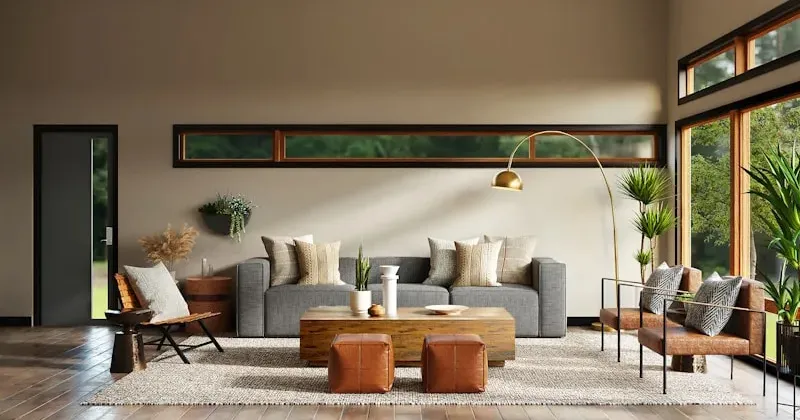
The open kitchen to living room is one of the most sought-after layouts in modern apartments and houses. But integrating these two spaces isn't simply knocking down a wall: it requires a coherent design where cabinet facades play a central role in the visual unity of the space.
Why Open Kitchens Gained Popularity
The trend toward open kitchens has grown enormously over the past 15 years. The reasons are clear:
- Sense of spaciousness: Especially in small apartments, removing the wall between kitchen and living creates a much more visually generous environment.
- Socializing: The cook participates in conversation instead of being isolated.
- Natural light: Integrated spaces allow window light to reach the kitchen, which frequently lacks its own window.
- Child supervision: Young families value being able to see children while cooking.
The Challenge: A Kitchen That's Always Visible
When the kitchen is open, kitchen cabinets become living room furniture. This changes priorities:
Elevated aesthetics: Facades can't be "just functional." They need to look good as part of the overall home furnishing.
Visual order: Without a door to hide the mess, you need smart storage strategies and facades that conceal what you don't want to show.
Coherence with the rest of the space: Kitchen cabinets must dialogue with the sofa, the living room table, and the bookshelf. They can't look like they're from another planet.
Design Strategies for Integration
1. Facades That Unify
The most effective strategy is choosing kitchen facades that share a color palette or material with some piece of living room furniture.
- If you have a natural oak melamine bookshelf, use kitchen facades in the same oak tone.
- If the living room has white lacquered furniture, extend that white to the wall cabinets.
- For kitchens with an island or bar facing the living room, the visible face of the island should have the same aesthetic treatment as the living room.
2. The Island or Bar as Transition
The kitchen island or breakfast bar functions as a transition piece between both spaces. It's essential that:
- The face facing the living room has a "living room" finish (wood, lacquer, decorative panels).
- The face facing the kitchen can have shelves, drawers, and functional facades.
- The countertop acts as a dividing line without blocking the view.
3. Floor-to-Ceiling Cabinets
In open kitchens, floor-to-ceiling cabinets create a "furniture wall" effect that reads more as architecture than kitchen. This helps integration because:
- They eliminate the dirty space above cabinets.
- They create a continuous, clean surface.
- If you use flat facades without handles, the effect is even more architectural.
Recommended Materials for Open Kitchens
Common Mistakes in Open Kitchens
Choosing facades that contrast too much with the living room: If the living room is all warm wood and the kitchen is all shiny white, it looks like two rooms stuck together, not integrated.
Not planning joint lighting: The kitchen needs functional light over the counter, but that light is visible from the living room. Use under-cabinet lights with warm temperature (3000K) that don't clash with living room lighting.
Forgetting smells and noise: A powerful range hood is essential. And soft-close drawers prevent slamming that echoes throughout the space.
Ignoring hidden storage: Everything you'd store behind the kitchen door now needs a closed place. Plan cabinets with sufficient capacity.
Layouts That Work Best
L-shaped kitchen with island: The star layout for integrated spaces. The L goes against the walls and the island visually separates without closing off.
Linear kitchen with bar: For smaller apartments. The kitchen occupies one wall and the perpendicular bar marks the boundary with the living room.
Open U-shaped kitchen: Only works in large spaces. The U forms with two walls and the bar or island closes the third side.
What to Do with the Refrigerator
The refrigerator is the largest and most visible appliance. In open kitchens:
- Build it in: The best option is a tall cabinet that contains it with facades matching the rest.
- Place it at the end: So it's not the first thing visible from the living room.
- Front panel: Some refrigerators accept custom panels that can be made from the same material as the facades.
Extra Budget for Aesthetics
An open kitchen costs between 15% and 25% more than an equivalent closed kitchen. The extra cost comes from:
- Higher aesthetic quality facades (you can't hide cheap doors behind a door).
- The island or bar with double face (functional + decorative).
- Silent hardware (soft-close mandatory).
- More powerful and possibly more aesthetic range hood.
Conclusion
Designing an open kitchen to living room requires thinking of kitchen cabinets as an integral part of the entire home's furnishing. Facades are the visual element that most impacts this integration: choose materials and colors that dialogue with your living room, invest in quality finishes, and plan sufficient storage to maintain order. The result is a unified, bright, and social space that maximizes every square meter of your home.