Facades for Living Room Furniture and Bookcases
The best facade options for living room furniture, bookcases, and TV units. Materials, styles, and trends.
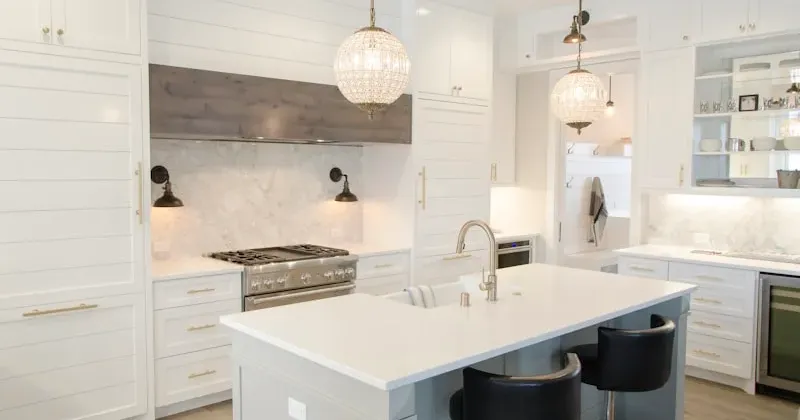
Facades for Living Room Furniture and Bookcases
Facades aren't exclusive to kitchens. Living room furniture, bookcases, TV units, and sideboards require the same level of attention in materials and finishes. The difference is that in the living room, aesthetics outweigh functional resistance.
Types of Furniture Using Facades in the Living Room
TV Unit / Media Cabinet
The most visible piece in the living room. Generally combines open sections (for electronics) with closed sections (for cables, remotes, objects). Facades cover the closed parts.
Bookcase / Shelving with Doors
Combination of open shelves for displaying books and decorative objects with closed modules at the bottom. Facades hide miscellaneous storage.
Sideboard / Buffet
Low storage piece, usually against the dining wall. Stores tableware, tablecloths, candles, and dining items.
General Storage Unit
Floor-to-ceiling closed modules functioning as a living room closet. Ideal for storing everything you need nearby but out of sight.
Popular Facades for Living Rooms
Natural Wood or Wood-Look Melamine
The warmest and most versatile option. Tones from light oak to dark walnut. Latest generation textured melamine is nearly indistinguishable from real wood at much lower cost.
Trending tones: natural oak, smoked oak, American walnut, aged teak.
Matte Lacquer in Neutral Colors
For a modern, sophisticated look. Matte looks more elegant than glossy in living room furniture. Popular colors: white, pearl grey, olive green, petrol blue.
Wood + Solid Color Combination
The current winning formula: structure or section in wood melamine + facades or sections in solid color (usually white, grey, or black). The contrast creates visual interest without overdoing it.
Rattan or Cane
Facades with natural or synthetic rattan inserts. A very strong trend in living room furniture, adding organic texture and bohemian or tropical style.
Frosted or Fluted Glass
Translucent glass that lets you glimpse contents without clearly showing them. Fluted glass is one of the strongest current design trends.
Living Room Specific Considerations
Cable management: Media furniture needs cable passages, rear ventilation, and easy access to connections.
Electronics ventilation: If housing amplifiers, game consoles, or decoders, facades need perforations or slots for ventilation.
Book weight: A loaded bookcase exerts significant pressure. Internal shelves need reinforcement beyond 60 cm spans.
Integrated lighting: Bookcases and living room furniture look spectacular with integrated LED lighting in open shelves, spots in closed display cases, and backlighting behind the unit.
Living Room Furniture Styles
Minimalist: Smooth push-to-open or gola profile facades. Single material or color. No visible handles.
Nordic/Scandinavian: Light wood (oak or beech) combined with white. High legs. Simple but warm lines.
Industrial: Metal, dark reclaimed wood, visible hardware. Iron structure with wood shelves and rustic facades.
Contemporary: Mix of textures (wood + lacquer + glass). Asymmetric design. Play of solids and voids.
Updated Classic: Simple moldings, neutral colors, elegant metal handles. Less ornamentation than pure classic but more detail than modern.
Standard Dimensions
TV Unit: Width 120-240 cm, Depth 40-50 cm, Height 40-60 cm (low) or up to 200 cm (wall-mounted modular)
Bookcase: Width per module 40-100 cm, Depth 25-35 cm, Height 180-260 cm (floor to ceiling)
Sideboard: Width 120-200 cm, Depth 40-50 cm, Height 80-100 cm
Hardware for Living Room Furniture
Living room hardware can be more decorative than in the kitchen:
- Leather handles for Nordic styles
- Brushed brass handles for transitional elegance
- Artisanal ceramic knobs for bohemian or vintage styles
- Push-to-open for total minimalism
- Brass shell handles for updated classic style
Conclusion
Living room furniture deserves the same facade attention as the kitchen. The difference is that in the living room, aesthetics rule: choose materials and finishes that complement your overall decor. Mix textures, play with open and closed, and don't underestimate the power of integrated lighting to transform a simple piece into a design statement.