Tempered Glass Kitchen Facades: Complete Guide
Everything about tempered glass in kitchen facades: types, advantages, limitations, and combinations with other materials.
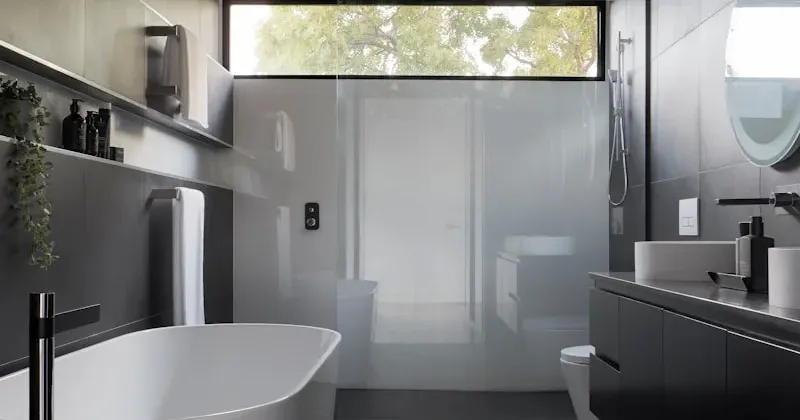
Tempered Glass Kitchen Facades: Complete Guide
Tempered glass in kitchen facades combines modernity, luminosity, and a unique appearance. While not the most common choice, it's gaining ground in designer kitchens and premium remodels. Let's examine when it works, when it doesn't, and how to get the most from it.
What is Tempered Glass
Tempered glass is regular glass subjected to a thermal treatment making it 4-5 times more resistant than standard float glass. When it breaks (which is difficult), it fragments into small blunt pieces instead of dangerous shards. This makes it safe for kitchen furniture use.
Types of Tempered Glass for Facades
Lacquered Glass (Lacobel)
Tempered glass painted on the back face. The color shows through the glass, creating a depth and shine effect that no other material matches. Available in a wide range of colors.
Satin Glass (Frosted)
Acid or mechanical treatment that gives it partial opacity. Lets light through but doesn't reveal cabinet contents. Ideal for wall cabinets where you want interior lighting without showing the mess.
Clear Glass
Used mainly in cabinets with decorative contents (dinnerware, glasses, spices). Requires permanent interior order because everything is visible.
Mirrored Glass
A dramatic effect that visually expands space. Used in small doses: a couple of cabinet doors or a back panel.
Advantages of Tempered Glass in Kitchens
Luminosity: Glass reflects and transmits light like no other facade material. In dark or small kitchens, a glass facade can transform the perception of space.
Moisture resistance: Unlike wood or melamine, glass doesn't absorb moisture or warp. It's immune to kitchen steam.
Cleaning: The surface is completely smooth and non-porous. Cleans with glass cleaner and looks impeccable. Doesn't retain grease or stains.
Color durability: Unlike lacquer (which can yellow with sun), lacobel glass maintains its color unchanged for decades.
Premium appearance: A kitchen with glass facades is immediately perceived as high-end.
Limitations and Considerations
Weight: 4-5mm tempered glass (standard facade thickness) is significantly heavier than melamine. Hardware must be dimensioned for this weight.
Cannot be drilled after tempering: Once tempered, glass accepts no drilling or cutting. All holes (for hinges, handles) must be made BEFORE tempering. This demands exact measurements.
Cost: Tempered glass facades cost 2-3 times more than melamine. For a complete kitchen, the budget increases considerably.
Fingerprints: On shiny glass (lacobel, clear), every touch leaves a mark. Requires frequent cleaning or choosing satin glass.
Edge fragility: While the center of tempered glass is very resistant, edges are its weak point. A strong edge impact can cause the complete piece to shatter.
Where to Use Glass in the Kitchen
Upper wall cabinets: The ideal location. Cabinet doors are touched less than base cabinets, are protected from impacts, and the visual effect is maximum at eye level.
Island or bar (decorative panel): A lacquered glass panel on the living room side of the island creates a spectacular effect.
Backsplash: Technically not a facade, but lacobel tempered glass as a backsplash is a perfect combination with glass facades.
Avoid in high-traffic base cabinets: Base cabinet doors receive more impacts (from legs, knees, objects). Glass is more vulnerable there.
Effective Combinations
Glass works best in combination with other materials:
Hardware for Glass Facades
Hinges: You need glass-specific hinges. Most common are clamp hinges that grip the glass without drilling, or hinges fixed in pre-tempering perforations.
Handles: Attached with UV adhesive or fixed with through-bolts (pre-drilled). Adhesive handles are visually cleaner but less durable.
Push-to-open system: Works excellently with glass, eliminating handles for an ultra-clean look. The most modern combination.
Maintenance
- Clean with glass cleaner or diluted white vinegar.
- Use microfiber cloth (not cotton, which leaves lint).
- Avoid abrasive sponges that might scratch the surface.
- For lacobel glass, always clean the glass face (exterior), never the painted face.
- Periodically check that hinges are tight: a loose hinge can cause an impact that damages the edge.
Manufacturing and Installation Process
- Exact measurement: Openings are measured with millimetric precision.
- Cutting and drilling: Glass is cut to size and all necessary perforations are made.
- Tempering: The cut and drilled glass is tempered in an oven.
- Lacquering (if applicable): The back face is painted.
- Installation: Hinges are mounted and installed in the cabinet.
The complete process takes 10-15 business days. It's not something that can be improvised or adjusted on the fly.
Conclusion
Tempered glass in kitchen facades is a bet on modernity and luminosity. It's not for every kitchen or every budget, but when used well — especially in wall cabinets, islands, and as a complement to other materials — it completely transforms the space's appearance. The key is combining it intelligently and choosing the right type of glass for each location.